The Nativity of the Lord – Christmas - Mass During the Night
/
“O come, let us adore Him”. Homily for Christmas at the Midnight Mass.
Read More“O come, let us adore Him”. Homily for Christmas at the Midnight Mass.
Read MoreThis is a special homily given by Fr. Hamilton for the Rorate Mass on Dec. 15, 2018. Rorate is a traditional Advent devotion wherein the Mass of the Blessed Virgin Mary for Advent is offered just before dawn.
Read MoreIn his homily for the Feast of Our Lady of Guadalupe, Fr. Hamilton challenges us to honor her not with our lips but with action, moving to a deeper life with Mary’s son, Jesus.
Read MoreIn his homily for the Solemnity of the Immaculate Conception of the Blessed Virgin Mary, Fr. Stephen Hamilton reflects on Mary’s role as the new Eve whose “Yes” un-tangles the bonds of sin that bind us.
Read MoreIn today’s Gospel reading, three different parties ask Jesus, “What should we do?”.
Read MoreDominica III Adventus C
16 December 2018
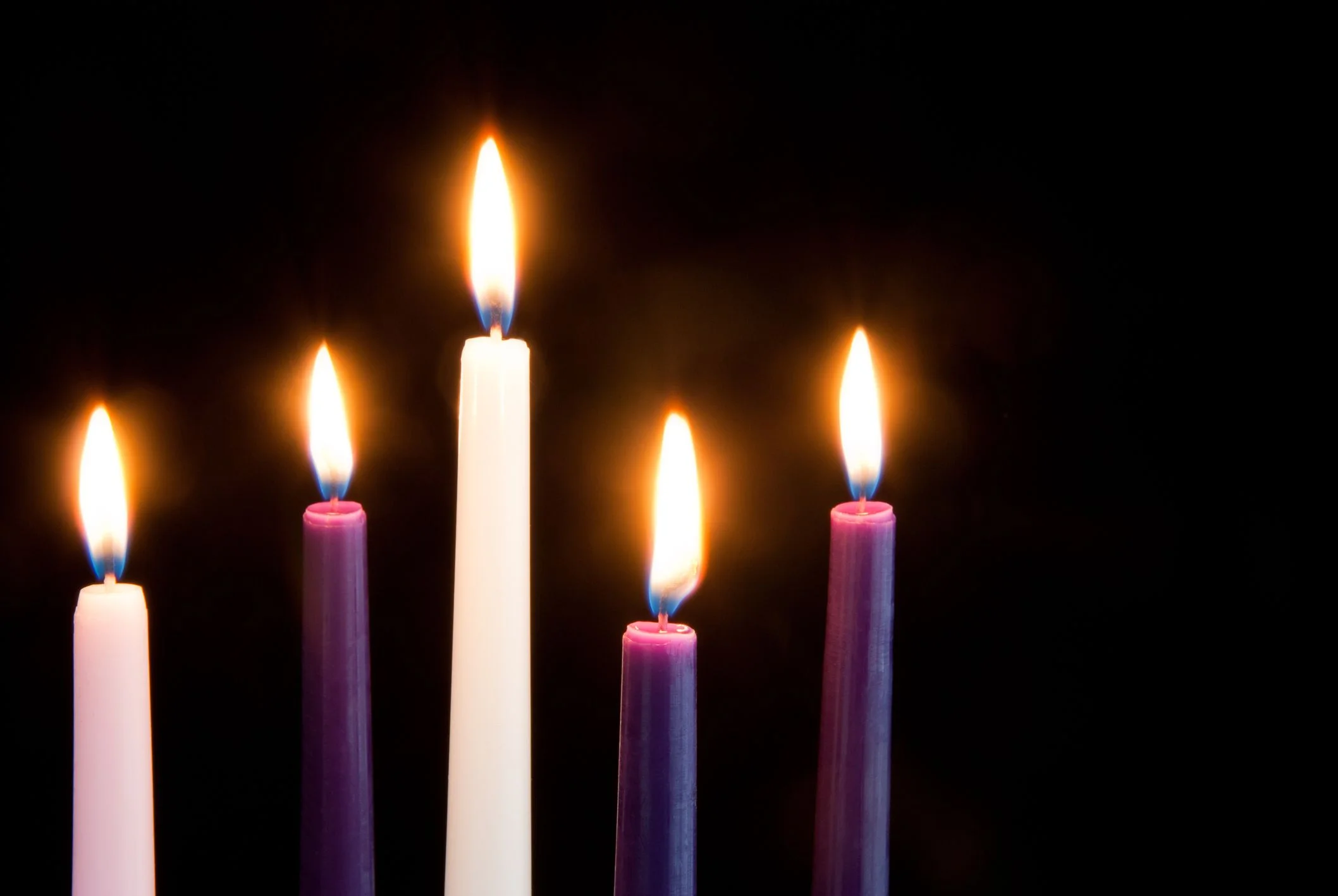
The change of vestment color for this weekend and the permission to decorate the sanctuary with flowers serve as a visual reminder that over half of Advent is in the past. The color rose – rose being traditionally associated with joy – and the repeated message of the Scriptures call us to rejoice. And so this day has been called “Gaudete Sunday” or “Rejoice Sunday.” This weekend the Church calls us to step up our joy because we have completed more than half of this holy season and are drawing near to the celebration of the source of our joy, the birth of Christ Jesus.
The gospel selection is the continuation from last Sunday of the preaching of that famous Advent figure, St. John the Baptist. If you back up to the start of Chapter 3 of St. Luke, from which chapter the gospel is taken, you see the world scene into which St. John was sent to preach. St. John the Baptist is preaching his message in the reign of Tiberius Caesar, while Pontius Pilate is governor of Judea, and while Herod ruled as tetrarch of the Jews in Galilee. Each of these figures in St. John’s world has a checkered legacy. If you find yourself lamenting how bad things are today (and they are!), and if by that you uncritically adopt the notion that it was easier in Jesus’ time (it wasn’t!), then you need to correct that thinking. Tiberius is associated with adultery, murder, and political executions. Herod’s life is associated with lavishness, jealousy, and sexual excess. And Pontius Pilate. We know that story. St. John’s preaching was at times a seemingly non-threatening proclamation. Things like: “I am not the Christ” (Jn. 1:20), “I am the voice of one crying in the wilderness” (Jn. 1:23), “He who is coming after me is mightier than I” (Mt. 3:11), “I am not worthy” to untie his sandal (Jn. 1:27), “Behold the Lamb of God” (Jn. 1:36). These are the sorts of messages that are easy to hear from a preacher. But St. John also knew how to deliver the hard truth. Things like: “Repent” (Mt. 3:2), “You brood of vipers! Who warned you to flee from the wrath to come?” (Lk. 3:7), “Even now the axe is laid to the root of the trees; every tree therefore that does not bear good fruit is cut down and thrown into the fire” (Lk. 3:9). St. John was a tough and wild preacher. After all he wasn’t arrested and beheaded for failing to speak the truth.
When you think of the very different personalities who listened to St. John and who heard him preach – the powerful rulers, the religious authorities, the everyday people – what accounts for the difference in those who responded to his message versus those who did not? I think an answer is that question that three different groups ask in the gospel. “What should we do?” In St. John’s time, and as now, some people are going to hell and are heading there with wild velocity. Then, like now, some people are trapped in grave sin but perhaps various circumstances or personality struggles lessen their guilt. Then, like now, some people are basically holy but are still working out the lesser sins. Then, like now, our lives might be marked by some or all of this. Then, like now, some are responding to God’s grace and making their way to deeper friendship with God. What should we do? It’s a question from those we hear about in today’s gospel, a question that shows a serious engagement with the message of St. John. That serious engagement makes all the difference and leads to repentance.
What should I do? Are you willing to hear the call of God across the ages to repent and prepare for His day, culminating in His arrival in our flesh to save us? Or are you here but sort of coasting through the drama of salvation? It is time to listen to the call of God and to seriously engage with the need to repent and to engage with the generous offer of God’s loving mercy. What should I do? It’s a question we should ask ourselves. The answer, like it was for the crowds, for the tax collectors, and the soldiers, is not too high, lofty, or impossible for us. If you have two cloaks and enough food, give some to the person with none. Like the tax collectors heard, stop cheating and do your work well and fairly. Like the soldiers heard, don’t use your power to lie and to take advantage of others, but be loyal and satisfied with what you have.
When we engage seriously with the call to repent and to foster life with God we stop treating the Gospel we hear as simply a collection of faith stories from the past serving purely to remind us to be religious. When we engage seriously with the call to repent we allow the drama of salvation to be something alive and active within us who are still being saved by God’s grace. When we engage seriously with the call to repent we are willing to be moved out of our stagnation and to ask that uncomfortable question that betrays that I need to change. “What should I do?” It is the willingness to ask that question of ourselves day in and day out of our earthly journey that permits us to live the joy and rejoicing encouraged by this Gaudete Sunday because repentance, confession, and conversion lead us away from a relationship with God’s wrath and instead to a relationship with the Father who saves us by placing the irreplaceable gift of His Son in our midst. What cause for our rejoicing! As we heard in the first reading, “Shout for joy…. Be glad and exult…. The Lord, your God, is in your midst, a mighty savior; he will rejoice over you with gladness, and renew you in his love.”
Our Lady of Guadalupe
12 December 2018
Today we observe with great joy the miraculous event 487 years ago by which the Blessed Virgin Mary made herself known as Holy Mary of Guadalupe. Her appearance is referred to as “mestiza,” meaning someone of mixed race. The description of her beauty tells us of the harmony in the mix of her Spanish and Indian features. With the beauty and the harmony of that mix in mind, I want to make a simple observation about a lesson for us on this feast of Our Lady of Guadalupe.
Mary is the woman of faith who said “yes” to God the Father. Her “yes” resulted in the fulfillment of God’s plan to come close to us, to “mix” with us in our very flesh. Mary is the example to us of how to live in harmony with God such that our humanity and divine grace mix to create beauty and praise to God. Mary appeared in a place marked by the error of false religions and the brutality of human sacrifice offered to false gods. Thus, we can say her appearance also places in contrast the ugliness that develops when we fail to live in harmony with the beauty of God’s image, an image and likeness He made to be reflected in us. The appearance of the mestiza beauty of the Virgin of Guadalupe reminds us that we are not made to mix with sin, which deforms our appearance and our dignity.
The Prophet Isaiah says, “How beautiful upon the mountains are the feet of him who brings good tidings” (Is. 52:7). My brothers and sisters, to honor the mestiza beauty of Mary who appeared in Guadalupe we must not stand here to honor her with our lips while our feet stand and remain in the filth of sin. If our feet carry us here today, then we must complete our journey by moving our feet to deeper life with Mary’s Son, our Savior, Jesus. We must move away from sin and refuse to mix with it. We must move our feet to confession and to worship Jesus at least every Sunday and holy day at Mass. We must live in harmony with God such that we may carry the Good News, the tidings of salvation, and draw others to conversion by the beauty of our harmonious mix with divine life.
Hoy observamos con gran alegría el milagroso evento de hace cuatrocientos ochenta y siete años por el cual la Santísima Virgen María se dio a conocer como Santa María de Guadalupe. Su apariencia se conoce como “mestiza,” que significa alguien de raza mixta. La descripción de su belleza nos habla de la armonía en la mezcla de sus rasgos españoles e indios. Con la belleza y la armonía de esa mezcla en mente, quiero hacer una observación simple sobre una lección para nosotros en esta fiesta de Nuestra Señora de Guadalupe.
María es la mujer de fe que dijo “sí” a Dios Padre. Su “sí” resultó en el cumplimiento del plan de Dios de acercarse a nosotros, de “mezclarse” con nosotros en nuestra propia carne. María es el ejemplo para nosotros de cómo vivir en armonía con Dios, de modo que nuestra humanidad y la gracia divina se combinen para crear belleza y alabanza a Dios. María apareció en un lugar marcado por el error de las religiones falsas y la brutalidad del sacrificio humano ofrecido a los dioses falsos. Por lo tanto, podemos decir que su apariencia también pone en contraste la fealdad que se desarrolla cuando no vivimos en armonía con la belleza de la imagen de Dios, una imagen y semejanza que Él hizo para reflejarse en nosotros. La aparición de la belleza mestiza de la Virgen de Guadalupe nos recuerda que no estamos hechos para mezclarnos con el pecado, lo que deforma nuestra apariencia y nuestra dignidad.
El profeta Isaías dice: “Qué hermosos son los pies de quien monta las buenas nuevas en las montañas (Is. 52:7). Mis hermanos y hermanas, para honrar la belleza mestiza de María que apareció en Guadalupe, no debemos estar aquí para honrarla con nuestros labios mientras nuestros pies permanecen en la inmundicia del pecado. Si nuestros pies nos llevan aquí hoy, entonces debemos completar nuestro viaje moviéndolos a una vida más profunda con el Hijo de María, nuestro Salvador, Jesúcristo. Debemos alejarnos del pecado y negarnos a mezclarnos con pecado. Debemos mover nuestros pies a la confesión y a adorar a Jesús al menos cada domingo y día santo en la Misa. Debemos vivir en armonía con Dios para que podamos llevar la Buena Nueva, las noticias de la salvación, y atraer a otros a la conversión por la belleza de nuestra armoniosa mezcla con la vida divina.
Dominica I Adventus C
2 December 2018
Our word “advent” comes from the Latin “adventus,” which is a translation from the Greek word “Parousia.” Parousia means “arrival” or “coming.” Our use of “advent” refers not only to the coming of Christ at his Incarnation and birth at Christmas, but it also refers to his second coming at the end of time, his coming as Judge. In fact, it is this second coming that is most commonly associated with the word “Parousia.” Advent is the start of a new Church liturgical year. It is a time of year that is hectic and exciting in holiday anticipation. It is a time of year that is tender with family gatherings, parties, rich memories, and holy songs. Given how this time of year is spent by us, it is safe to say that perhaps the gospel selection today sounds almost strange to us, as if it doesn’t fit. And perhaps that raises a critical question: What is truly strange? Is it the Church’s liturgical focus and scriptural selection that is strange and doesn’t fit? Or is it how we live that risks not fitting with Christian preparedness and vigilance for the moment when the Lord comes again? If the gospel is almost like a disappointment or sounds strange to us then we have a good opportunity to catch our error and to make change so as to prepare for the coming, the advent, the Parousia of the Lord!
The gospel is from Jesus’ discourse on the Mount of Olives where he speaks of his second coming. He speaks of dramatic cosmic signs that will accompany his return in glory and he alludes to a prophecy from the Book of Daniel that the Son of Man will come in the clouds. These signs are disturbing. People will be in dismay and perplexed. In fact, “people will die of fright in anticipation of what is coming upon the world.” Considering this, Jesus’ instruction is hard to swallow. He says when you see these things “Stand erect and raise your heads because your redemption is at hand.” When we are assaulted by things that cause dismay, leaving us perplexed, and which may even cause one to die of fright – I don’t know about you, but my inclination is to duck for cover and to keep my head down. Imagine a battlefield riddled with violence and bullets flying. Ducking and putting your head down seems to be the best policy. And a battlefield is nothing compared to the signs of the Second Coming. But Jesus tells us to stand up. Almost like a football coach teaching tackling method, he tells us to raise our heads, to face the cosmic signs we can’t control or understand because it means our redemption is arriving.
How are we possibly supposed to face the final advent? Jesus tells us that our responsibility is to be prepared. And he tells us some things NOT to do in order that we are prepared. Jesus says, “Beware that your hearts do not become drowsy from carousing and drunkenness and the anxieties of daily life.” Jesus warns us to take care that our hearts not be weighed down by things that will prevent us from being ready to stand erect and to raise our heads. In particular, we must be on guard not to become drowsy from carousing. Other translations of this passage use the word “dissipation.” That’s a word commonly used of the young son in the Parable of the Prodigal Son. The word in Greek translated as dissipation or carousing refers to “unbridled indulgence.” Carousing then is unbridled indulgence in all the pleasures of the flesh: money, sex, power, the things of this world and how the world evaluates a noteworthy or successful life. These are the things that we fall to so easily in our fallen nature, making them our focus and, in so doing, becoming weighed down with an earthly, lower focus that obscures our true dignity as God’s children and impedes our ability to be ready to stand up and to raise our heads with what me might call the “lightness,” the levity of freedom. To respond to Jesus’ call to be vigilant for his second coming, we have to guard our hearts so that we do not let them fall in love with a disordered and unbridled attachment to lower things.
The second bit of advice from Jesus is much more immediately clear, but perhaps even more stark to us given how simple and confrontational it is. He highlights the grave sin of drunkenness. Deliberate inebriation is a serious sin that Jesus singles out as something to be avoided if we are to be vigilant for his return. Why might the Lord highlight this issue? Because deliberate inebriation or carelessness in drinking serves as a symbol of someone who has become so wrapped up in the pleasures of this world that the person has lost control of him- or herself. Someone who is drunk does not have control of his faculties. He or she has lost the control of the mind and the will. We all know that drinking, especially excessive drinking or drunkenness often results in one’s guard being down, in the loss of inhibitions that might otherwise tell us to straighten up and choose moral good. In other words, drunkenness is to deliberately enter into a state where we are lower than we are made to be, where we are less than our dignity.
The final advice for vigilance is that we must beware of the anxieties of daily life. This harkens to the Parable of the Sower where the seed of God’s Word is planted but thorns, which Jesus says are the anxieties of life, choke it off and smother the seed of God’s Kingdom. To be prepared for his second coming Jesus tells us we must avoid letting our hearts be weighed down and consumed by anxiety. We might ask ourselves if we lose sight and hope in the seed of God’s Kingdom planted in us? Do I focus on the anxieties and the problems of life to such a degree that I actually give little attention to – or even forget – God’s Kingdom? It is the kingdom that is like yeast in a batch of dough or like a mustard seed that starts as the smallest thing but then has impact well beyond the worldly measure of its size. Do I forget that? In the face of my worries and preoccupations do I let myself remember this truth and this promise of Jesus? Or am I weighed down? This advice might be the most interesting of the three. Why? Because here Jesus isn’t talking about avoiding a specific sin, like the other two (indulgence and drunkenness). Here he expresses the danger of being too worldly focused, putting too much stock in this life and our estimations of our progress such that we lose an other-worldly focus, a focus on his kingdom.
So, how do we avoid these things? How should we prepare this advent for Christmas and for the final advent at the Second Coming, such that that day not catch us by surprise like a trap? Jesus says, “Be vigilant at all times and pray.” This refers to the spiritual advice of staying awake and praying, especially in the night time hours. This spiritual discipline of vigilance is perhaps less considered than something more familiar like fasting, but it is just as much part of the Jewish and Christian traditions. Monks get up while it is still dark, late at night or very early in the morning, to pray. That time of prayer – not surprisingly – is called “vigils.” This call to be vigilant, to stay awake and to pray, helps us understand and appreciate key Catholic practices. Ever wonder why we have a Midnight Mass at Christmas? The older I get, I sure do! To keep vigil, to stay awake and to pray ourselves into the dawning of light on Christmas Day. We keep vigil on Holy Thursday night after the Mass, praying before the gift of the Lord’s presence in the Blessed Sacrament. We do that all night until midnight. We have an Easter Vigil that is always held in the darkness of Holy Saturday night so that we keep vigil as preparation for the arrival of Easter Sunday. Maybe hearing about these practices today gives us some added push to make the effort to attend these Masses in the coming year. The spiritual practice of vigilance can also be grown in the devotion of Adoration of the Blessed Sacrament. When we come to an adoration chapel anywhere in the Catholic world we are coming to be vigilant, to stay awake and to pray before and with the Lord. Perhaps the message of Jesus on this First Sunday of Advent might drive you to take up this practice, to commit to adoration, and to let the Lord prepare you for his return. The Lord tells us to be vigilant, to stay awake, and to pray that we may have strength to escape what comes and to stand before him. Physical strength will do us no good at the Second Coming. We need spiritual strength. Train yourself in that spiritual discipline that we perhaps unwisely leave only to the most dedicated monks. Stay awake and pray. Avoid the drunkenness and the carousing so often associated with secular “night life” and “the weekend.” Stay awake and pray with the Lord in adoration so that you remind yourself of his Kingdom already present here and now, whose fullness we await in the next life. Train yourself in prayer and adoration to desire that Kingdom more than daily anxieties. And as you pray before the Lord now let him help you identify the sins that need confession. Let him raise your head and cause you to stand secure in his love such that when that day with disturbing signs comes, you may see it not as a day of fear but as the arrival, the advent, of the gift of God’s love and desire for you: “Your redemption is at hand!”
In this homily for the First Sunday of Advent, Fr. Stephen Hamilton focuses on the Gospel image of drunkenness, not only as a sin, but also as a symbol of unpreparedness in our spiritual vigilance for the coming of Christ as anticipated in our observance of Advent but also in our ever present hope in Christ’s second coming.
Read More“Do not be afraid. For the Lord God will not let us go empty.”
In this homily for Thirty-second Sunday in Ordinary Time, Fr. Stephen Hamilton reflects on today’s reading from 1 Kings and the Gospel of Mark. In those passages we hear the story of two widows who gave all that they had to the Lord and in their example we can learn to be transformed as disciples of Christ.
Read MoreThe Church is Holy. A reflection on the Solemnity of All Saints by Fr. Stephen Hamilton.
Read MoreDominica XXX per Annum B
28 October 2018
Upon receiving his sight the Gospel tells us that Bartimaeus “followed [Jesus] on the way.” The Scripture readings chosen for this Holy Mass are marked by several allusions to the good things that are possible when we follow the path of the Lord, as compared to the distance and exile from God that we create when we sin and choose to stray along our own path.
I want to point you to the Gospel for the first allusion to the good that is possible when we remain faithful to following the way of God. The Gospel selection tells us that “Jesus was leaving Jericho with his disciples and a sizable crowd.” The larger context in this section of St. Mark’s Gospel informs us that Jesus is going to Jerusalem where he will arrive for the Passover. Jews in Palestine (at least those who were able) would make annual pilgrimage to the Holy City Jerusalem to observe the Passover. And what did the Passover commemorate? God’s goodness and faithfulness in leading His people along the pathway out of Egypt and toward the Promised Land. We can conclude that this sizeable crowd that passes by Bartimaeus is made up of many pilgrims on the joyful procession to Jerusalem where they will commemorate following faithfully the path of God. This allusion to the blessing that is possible when we follow God’s ways is amplified when you consider the location named in the Gospel: Jericho. What is significant about that city? It was the site of Israel’s first conquest in the holy land as they began to take possession of what God had promised. That familiar conquest story is recounted in Joshua 6 when, by God’s power, the Israelites conquered Jericho after a seven-day liturgical march around the city, carrying the Ark of the Covenant, blowing horns and shouting as the walls of the fortified city fell. Thus, this Gospel wants to make us think about the blessing that came when God’s People followed His lead.
The Scripture selections also allude to the distance and exile from God that comes when we stray and follow our own path. We can’t help but recall that Israel’s history is also marked by wandering in the desert and distance from God, a distance we too experience when we choose to sin and to stray from where God leads. For this we can look at the first reading from the Prophet Jeremiah and also the psalm. The first reading makes reference to Israel’s exile to the land of the north. They were scattered and driven from the Promised Land after being unfaithful in their choice to adopt pagan ways rather than living according to God’s ways. The first reading is a prophesy of joy when the Lord will deliver the remnant of Israel and bring them back, gathering His people as an immense throng, “with the blind and the lame in their midst.” The Prophet Jeremiah says that though God’s people were exiled in tears, God will console them and guide them, and lead them so that none shall stumble.
The example of Bartimaeus in the Gospel is an invitation to us to recognize our blindness and the obstacles that cause us to stumble and to stray from the direct path Jesus opens before us. The example of Bartimaeus is an invitation to us to throw aside the cloak of our old ways, the sins and the lack of love for Jesus that contribute to our sitting on the roadside and failing to advance in the way of holiness. The example of Bartimaeus is an invitation to us to hear the repeated message of being called by Jesus and called by His Church to join the great procession that is the way of the Lord, the way that leads to Heaven. In the past many weeks’ gospel selections, where Jesus has taught his disciples on the way to Jerusalem, we have seen their blindness toward the way he will be the Messiah. Today we hear of the blindness of Bartimaeus. God’s Word invites us to recognize our own spiritual blindness and the obstacles in our lives to following Jesus on the way. Jesus always stands ready to pause his journey and to heal us if we will call out and come to him. When we stray from the path and refuse to call out to Jesus we remain blind, distant from God, and sitting idly along the road. When we reject the voices that tell us to be silent and instead call out like Bartimaeus then we are taking the first steps to correct our course and to join the procession of Jesus toward freedom and entrance into the Promised Land of heaven. Just as in the Gospel, both Jesus and his Church call us to rise and to come close to Jesus. If we desire greater sight and the ability to follow Jesus on the way, may we learn to cry out in faith: “Jesus, son of David, have pity on me!”

In this Sunday’s homily, Fr. Stephen Hamilton reflects on St. Mark’s account of Jesus’ encounter with the the blind man, Bartimaeus and our own calls to our savior. "Jesus, son of David, have pity on me."
Reading 1 JER 31:7-9
Responsorial Psalm PS 126:1-2, 2-3, 4-5, 6
Reading 2 HEB 5:1-6
Alleluia CF. 2 TM 1:10
Gospel MK 10:46-52
Dominica XXIX per Annum B
21 October 2018
The selection from St. Mark’s Gospel this weekend is right around the third and final prediction Jesus makes about his impending passion. Like the first two predictions, it is met with a clueless and inadequate response from the disciples. Let’s do some brief review. The Sacred Liturgy for the Twenty-fourth Sunday in Ordinary Time had us listen to Jesus make his first prediction (Mark 8:31ff). The embarrassing response there was when Peter took Jesus aside and tried to convince Jesus he was wrong. Jesus responded with a serious tongue-lashing: “Get behind me, Satan.” We heard Jesus make the second prediction on the Twenty-fifth Sunday in Ordinary Time (Mark 9:31ff). The disciples did not understand and they were afraid to question Jesus. Moments later we learn the depth of their inept response. It becomes clear that in the very moment of predicting his passion, the disciples had been arguing about who among them was the greatest. And now this weekend, the Twenty-ninth Sunday in Ordinary Time, we hear the gospel selection immediately after Jesus’ third and final prediction, a selection that highlights again the impure motives of the disciples.
That in his very brief Gospel St. Mark devotes space to communicate three distinct predictions of the passion likely tells us something of its importance. That he uses space to highlight the inept response of the disciples likely also teaches us to be aware of our own resistance to suffering in the life of faith. Again, in this third prediction, Jesus and the disciples are on the way, going up to Jerusalem. Here however St. Mark makes the point of telling us that Jesus went ahead of them all (Mk. 10:32). The image this creates for me is one of Jesus insisting on facing head-on his mission and the will of the Father. He’s walking ahead. He’s blazing the trail. Meanwhile, the disciples, we might imagine are distracted, less than focused, day dreaming, perhaps dragging their heels, busy about imagining a Messiah who doesn’t suffer or how they can achieve a share in Jesus’ glory while avoiding the passion he predicts.
James and John come with the request: “Teacher, we want you to do for us whatever we ask of you.” Nice try, boys! They are seeking the top posts of power and authority in Jesus’ glory, in his kingdom. That’s what asking for seats at his right and his left mean. In the Davidic kingdom those seated on either side of the King were the next in authority. I have said this before, and I might risk repeating myself, but since Jesus repeats himself in these passion predictions, perhaps it bears repeating: Notice that Jesus does not rebuke or scold James and John for their boldness in asking. Rather he tells them how to achieve the desire. I think that is very noteworthy for us. It would seem that desire for greatness, desire to surpass our limits and our boundaries, the desire to surpass even life itself and to reach for eternity is very much part of our human nature. Jesus doesn’t reject that or say it is a cause of our shame or a reason we can’t be holy. No, rather he accepts the innate desire and simply focuses our attention on how to achieve it in a good way, in a way that makes us like unto him.
Does Jesus require that James and John – does he require that we? – accept the passion, accept suffering in the life of faith? Yes. That’s what his response about the cup and the baptism means. In the Old Testament a cup is a metaphor for what God has in mind for someone. It might be a cup of blessing (cf. Ps. 16:5; 23:5; 116:13) or the cup of His wrath (cf. Ps. 75:9; Is. 51:17-22; Jer. 49:12). Jesus has this latter meaning in mind since he will drink the cup of God’s wrath, God’s judgment for sin. Jesus requires James and John – and us! – to accept participation in suffering for sin. We have been engaged now for several weeks in our extraordinary time of penance and reparation for sin in the Church. Today’s Scripture lesson answers quite well that understandable question that might rise in our conflicted hearts: Why do we do penance? Why do we make reparation? Why do we invite suffering and inconvenience for sins that we did not personally commit? Because it is part of Jesus’ mission and in accepting the cup of God’s wrath for sin we become more like Jesus and that saves us while also making repair for the whole Body of Christ! The image of baptism in Jesus’ response to James and John also clearly communicates that suffering is part and parcel of the life of faith. Immersion in water is a biblical image for overwhelming calamity (cf. Ps. 42:8; 88:17-18; Is. 43:2). For this reason baptism in Christian history has always been viewed as a death, the dying of the old man of sin, a burial in the waters, with a simultaneous rising to new life of the man made new in Christ.
How often are we, like the disciples, ready to reach out and to grasp at the glory of Jesus’ kingdom, while trying to avoid suffering for sin, while keeping rejection and even death at an arm’s length? The false message comes easily enough. It sounds like this. There is so much to do each day and making time for prayer is just too hard. Surely praying once a weekend is enough! / I have the same sins over and over, do I really have to work to change them? / The drive to lust is just so strong, it’s like it overtakes me. Does Jesus really expect me to strive to become pure? Besides it’s like everyone else at school and all around me gives in all the time, do I really have to work and discipline myself to live in my body as the temple of the Holy Spirit? / I know my marriage is not what it is supposed to be, but the thought of opening the wounds and doing the work to improve is just so scary. It’s just easier to live with the status quo. I thought marriage was “happy ever after.” Is there really any value in suffering for my spouse, in suffering to improve my marriage? / My family is getting together for the holidays and that one relative will be there. How do I handle his partner? Where do I draw the line? Why does it have to be so hard? Does Jesus really expect me to take a stand? And if so, how do I do that? / How could God let her get that disease? Hasn’t she faced enough in her life? And of all people, she is so faithful! What value can there possibly be in such terrible suffering?
Quite easily do these and so many other examples of refusal to suffer come to our hearts and minds. With good reason does St. Mark highlight the passion three times. With good reason does he let us see the failures of the disciples each time. We have to be aware of the unholy tendency to resist suffering in our life of faith. To accept suffering in our own life means we are walking a proven pathway, chosen by Jesus himself, that has value and that leads to glory. But the value is not just the ultimate goal of the kingdom for which we wait. Rather, accepting suffering counteracts our tendency to think that suffering is a sign that God is distant or even absent. Embracing suffering brings grace now to others and to us who draw closer to the Suffering Servant who came to give his life as a ransom for many.
In this homily for the Twenty-ninth Sunday in Ordinary Time, Fr. Stephen Hamilton reflects on the audacious request made of Jesus by James and John, the Sons of Zebedee, to help us see our own audacious requests for God’s blessings while keeping penance and suffering at arm’s length.
Read More“Whoever receives one child such as this in my name, receives me; and whoever receives me, receives not me but the One who sent me.”
In today’s homily, Fr. Stephen Hamilton reflects on the silence in today’s Gospel passage, how the disciples struggled to understand Jesus’ prediction of his own Passion, and finally how similarly we fail to understand the crosses in our own lives.
Read MoreHomily for Wednesday of the Twenty-fourth Week in Ordinary Time, Ember Wednesday in September 2018, at the 2nd Mass in honor of the Five Sacred Wounds of Jesus in penance and reparation for the victims of abuse in the Church.
Read MoreHomily delivered September 14, 2018 at the Solemn High Mass at St. Damien Catholic Church.
Read MoreFeast of the Exaltation of the Holy Cross
St. Damien Church
14 September 2018
In the Name of the Father, and of the Son, and of the Holy Ghost. Amen.
I want to thank Fr. Pelster for agreeing and permitting us to schedule this Solemn High Mass in what is a time of penance and reparation for the Church, called for locally by Archbishop Coakley in his letter to us on August 31. Today’s feast gives us the opportunity to join together at Calvary and to plant the saving reality of the Holy Cross, not in dirt outside the walls of Jerusalem, but in the midst of the filth and dirt of heinous sin in our time. This Holy Mass is offered for the intention of the healing of victims of clerical abuse and for conversion of the clergy. Let nothing bring out of focus our attention to victims and the real harm done to them. No excuses, no dismissals should lessen our focus on victims. Let only our tears bring that attention out of “focus” because we weep due to unspeakable betrayal of the innocent and unspeakable betrayal of the Innocent Lamb without blemish!
None of us appreciates or likes how our beloved Church appears in this moment. She’s not supposed to look this way. She’s not supposed to be filthy. The Lord gave up his life to make her spotless. She’s supposed to be upright and standing tall. Instead she is knocked down and in the dirt. We hate this moment. We hate what has happened. We hate what it does to the Church and to us. We are conflicted by the mystery of the human elements of the Church and how they are united to the divine. How will she ever be better? How will she return to her proper glory? Just make it all go away. We are tempted to fall prey to ill-advised silence and cowardice. From the introit: “But it behoves us to glory in the Cross of our Lord Jesus Christ….” It behoves us to glory in the Cross!
If what I just expressed is true about how ill at ease we are with the disfigurement of the Church, how much more ill at ease are we with the disfigurement of Jesus, which today’s feast calls to our mind? When we think of the Cross can we possibly like the way the Lord appears? It doesn’t seem proper that he look so disfigured. It doesn’t seem proper for him who is God to be filthy and covered in blood. He’s not supposed to be thrown to the ground, but rather standing tall. Yet, if he could lower himself to such depths for our salvation… then perhaps our conflict about the Church in this present crisis can be seen with different eyes. What might cause us to view things differently when we are so disgusted by what is going on in the Church? The reality that the Church, the Body of Christ, is united with her Head might cause us to see with different lenses. What causes us to view this differently does not come about primarily by focusing on the Church, but rather by focusing on the Lord. You see, the Lord is united with his Church in this shame. We don’t want him in such a situation and we don’t want her, the Church, in it either. Recalling also that the Lord chose to lower himself from his proper glory in heaven to endure the Cross also reforms our vision. Certainly, it is a travesty to consider our Lord bruised, bloodied, and broken, as Isaiah prophesied about him: “As many were astonished at him – his appearance was so marred, beyond human semblance, and his form beyond that of the sons of men” (Is. 52:14). Yet, do we forget that in the Incarnation the Lord had already condescended mightily by leaving his heavenly glory to take on our flesh? Considering the infinite greatness of God are we numbed to how unfitting it was for him to take on our flesh? Isaiah again speaks of how low God made himself: “He had no form or comeliness that we should look at him, and no beauty that we should desire him” (Is. 53:2). And yet, this seemingly inappropriate lowering of self, this condescension of God to plant Himself in our lost state was already a disfigurement of sorts (at least as regards divinity), well before we ever get to the far greater disfigurement of the Cross. Only the immense love of God for us helps us cast aside our apprehension to accept what the Lord freely chose to do in order to save us. What we make of this is that God’s choosing of this path, is what helps us see the Cross and this present moment in Church life differently. Where we only see brokenness and filth and hopelessness, we believe in faith that divine eyes see something more. Why can we endure thinking of our Lord so disfigured and His Church presently so disfigured? Because he chose this path for purposes only he can accomplish and his Bride is united with him to pass from shame to glory! Think of this: In the suffering of Christ our Head, which we recall on this feast, the Lord used the government, the processes of Roman execution, to be crushed in order to fulfill his plan to accomplish not only death but ultimately the victory of resurrection. Consider the ugliness of our time and the disfigurement of our beloved Church at the hands of priests and bishops. What in many ways is forcing the hand and aiding a purification according to God’s plan? It is, to a degree, again the government being used to force the filth into the light and to drive it to the foot of the Cross to receive its judgment like so many vile demons. The government method the Lord is using today is, we might say, attorneys general who by the subpoena of records and forced investigation bring us great pain, yes, but oh, with the purification to come, we will see the Bride of Christ, the Church, appear more properly according to her nature as united in greater holiness to her Head. Because of the power of God to make the horror of the Cross more than just horror, it behoves us to glory in it and we can have confidence that as he was lifted up for our salvation, so he will make his power and victory evident again in his Church, his Bride. He will bring about a purification that causes our rejoicing and aids our ability to glory in what the world sees only as shame.
Oh sure, in our piety, we want to deny the Lord’s suffering in the words of Peter: “God forbid, Lord! This shall never happen to you” (Mt. 16:22). We feel the pain just imagining our good Lord so rejected, abused, beaten, dying, and bound to the Cross. Yet bound to that ugliness, like sacramental matter to form, is the plan of God to use His lowering and sacrifice of self so that He be raised high in victory. If we embrace the shame and the pain of purification right now in our age of the Church, there will be grace in our lowering of self and grace in being lifted high with our Head. We have to want this process as the Lord does: “Now is the judgment of the world: now shall the prince of this world be cast out. And I, if I be lifted up from the earth, will draw all things to Myself” (Jn. 12:31-32).
In the Name of the Father, and of the Son, and of the Holy Ghost. Amen.
Dominica XXIII per Annum B
9 September 2018
I’ve been reflecting on my past two sermons on the crisis in the Church. The first time I spoke on this I surprised myself by the intensity and emotion that came out of me. Last weekend was like getting a bigger picture and a context that I could not appreciate in my anger the first weekend I spoke on these events. I want to make sure that no one has a mistaken notion that the data I shared last weekend means I am saying the Church is now “in the clear.” Today I want us to consider the wrath and anger of God who has been deeply offended by the heinous crimes committed in His Church and by His churchmen. Whatever good the Church has done to address abuse, I think it is time for all of us as the Body of Christ to simply say to victims for whom the statistics never change: We are sorry. Though we may not be personally guilty, we accept guilt and blame on ourselves and accept the call to do penance and to make reparation for the harm done to the innocent. In accepting guilt on ourselves, you see, we are being Christlike in a most particular way that conforms us to the saving work of the One who most certainly is not guilty and is not responsible for sin, but who freely took our sin on himself in order to save us on the Cross.
Why does any one of us, not personally guilty, do penance for this situation? You might want to say, “Sure, Father, maybe a priest or a bishop ought to do penance for sins of priests and bishops, but why us, why the laity?” The Body of Christ is made up of many parts (1 Cor. 12:12, 14, 20, 27-30). We do not all have the same function. But we do share life and we do have the same primary vocation to holiness of life. This holiness is a personal response to Jesus in our lives. This holiness is a matter of our participating more fully in salvation. This holiness is also a corporate matter of permitting the Church of Jesus to be seen for who she is, one, holy, catholic, and apostolic. The Church’s sanctity can’t be fully seen if the laity aren’t involved. The laity are the majority of the Church’s members. All of us together must be living members of this Body. We can demonstrate now that we are living members of the Body of Christ by joining together and participating in what the Church now needs from us. St. Paul writes about the unity of the Church: “If one member suffers, all suffer together; if one member is honored, all rejoice together” (1 Cor. 12:26). Our common experience tells us the truth of this. Are you sick and angry about what you have heard and read about our Church, about some of our priests and bishops? I know I am. That’s the truth this Scripture reveals. Why are you sick and angry if you aren’t part of this? The sick and angry feeling I imagine we all feel at this time shows how we, as the Body of Christ, are united. If we feel the harm that has been done by a few, then we can understand the call to likewise all be involved in penance and reparation for our Church. Furthermore, when individually we don’t admit sin, then we aren’t moved to repent of it in the way Jesus gave us to repent; and when we don’t repent, then we don’t receive purification and healing that comes to us in confession. We as a Church take on penance and reparation so that a more thorough purification of the Church takes place. We are called to be part of that. The only lasting solution to this mess is a closer relationship with Jesus. We each need that individually and we each need to be part of this now for the Church. I am convinced that the stories of saints are being written right now by God. Will you let God write that story in you?
For a few weeks now I have prayed and thought about what to suggest to our parish in response to these events in the Church. I have my own personal plan that I will keep mostly private. But as a public person, I probably need to say something about the decision to shave my head. I mean it as a sign of mourning and penance. I am telling you this because I ask you, please, don’t treat it as something silly or an item for humorous conversation with me. In another climate it would be a light, trivial matter, but it is for mourning and penance. I explained this to the non-Catholic lady who cuts my hair. She immediately understood the reasoning and added: “Oh sure, you’re sort of stripping yourself and avoiding the vanity of appearance.” If I hadn’t been stunned by her faith and understanding, I should have said, “Do you want to become Catholic?” Perhaps this appearance can serve as a visible reminder to pray for victims, to pray for priests and bishops, to pray for me, for Fr. Bali, and for Fr. Mejia. Now I want to move into my suggestions for penance and reparation at the parish.
To understand my suggestions you need to keep in mind some basic assumptions I believe about this situation. If you find yourself wondering, or if you find yourself in conversations and people are asking, “Why would Father suggest this or that?” “Why would Father do that?” Come back to these three assumptions because they tell you how I see this moment and therefore they inform my suggested response:
I think we are dealing with something truly diabolical. Fasting and prayer and an awareness of serious battle lines is necessary. The first clergy scandal in the Church’s history happened among the apostles. Judas betrayed; Peter denied; nine others fled; only John remained. One out of twelve. And Jesus picked them all! St. John’s Gospel tells us Satan had put it into Judas’ heart to betray Jesus and that Satan entered him in the very act of eating at the Last Supper (cf. Jn. 13:2, 27). Judas bore his own personal responsibility, but the marks of Satan’s coordination were also evident. I think we have something similar in the current crisis. Satan has had his influence and entered the hearts, the minds, and the perverse wills of some priests and bishops. What a masterpiece the devil has orchestrated, getting the cooperation of human sinners, to infiltrate the priesthood (which is the sacramental image of Christ) in order to deform the Body of Christ. Some demons can only be expelled by prayer and fasting (cf. Mk. 9:29). I urge that from all of us.
The state of affairs here demands serious penance, penance on a biblical scale. The “I’m giving up candy” for Lent response is not adequate, unless you are a small child. We are being called to radical penance and reparation because I believe we are being prepared by God for the grace needed for a new wave of evangelization of a world that has become increasingly secularized, a secularization that has also wormed its way into the Church.
I think we need to consider what Jesus says is the greatest command (cf. Mt. 22:36-40). Jesus says the first is to love God with all that you are. This can guide our response and make sure we give focus to rightly ordering our relationship with God first. From proper relationship with God first and foremost, love of neighbor then follows. It is a natural and rather socially acceptable thing to work for the good of our neighbor. But I am not sure we as a Church keep an intense focus first on God. You see, it is easy and satisfying and gives us a sense of accomplishment to jump into action instead of first being quiet before God and placing ourselves in His presence. But if we don’t start with God, then our action is out of order and it distorts the great command as Jesus described it.
A text and audio copy of my remarks will be on the parish website and a summary will be sent to your email if we have an address. As always, if you would like further explanation or discussion of any aspect of my suggestions, please get in touch with me. Here is what I suggest for our parish; five ideas for penance and reparation:
Attend Daily Mass: In particular, five consecutive Wednesdays the daily Mass intention in our chapel will be “In Reparation,” asking healing for victims of abuse and repair for sins of the clergy. These Wednesdays start September 12 and end on October 10. You are encouraged to join in the chapel for the Mass at 5:30 pm, preceded by confessions. I chose five Masses in honor of the Five Sacred Wounds of Jesus (which are his wounds of piercing: 2 hands, 2 feet, and his side).
Fasting and abstinence on Wednesdays and Fridays. From antiquity, Christians fasted on both Wednesdays (marking the day Jesus was betrayed by Judas) and Fridays (marking the day Jesus died for our sins). Challenge yourself to observe meatless days (that’s what abstaining means in this context) and even fasting (which means taking only one main meal) in reparation for the sins and crimes of the clergy and for healing of victims. The older practice of what are called “Ember Days,” which were quarterly times of penance, sort of like quarterly mini-Lents, can also be observed with fasting. The fall Ember Days are:
Wednesday, September 19
Friday, September 21
Saturday, September 22
Weekly Holy Hour: Commit to one Holy Hour each week before the Blessed Sacrament in our chapel. You can make visits 24 hours a day, 7 days a week. In addition, I will preside over a public time of adoration for healing of victims and in reparation for the sins of priests and bishops on Thursday, September 20, from 7-10 pm. Come and go as you please in that time frame and know that you can join me in prayer and that I will lead various public prayers throughout that evening.
Invoking Mary & St. Joseph: I encourage each of you to pray the Rosary daily and to pray it as a family at least weekly for the intention of the healing of victims, conversion of the clergy, and sanctity in your family life. We pray the Rosary about 30 minutes before the start of each Holy Mass on the weekends. Can you commit to coming to church early enough to make the Rosary? At the conclusion of these Rosaries before weekend Masses we will add a prayer to St. Joseph. You can get a copy of this prayer for private and home use too. I want St. Joseph invoked with our praying of the Rosary because I am convinced one of the roots of the crisis of abuse and cover up among priests and bishops is what I described as a weak masculinity that has resulted in the loss of the ability to be fatherly. I want us invoking St. Joseph, the patron of fathers, protector of the Church, and terror of demons, so that a stronger masculinity and fatherly spirit may prevail. I would like husbands and fathers of the parish to step up to volunteer to lead the Rosary before Masses and, men, I’d like you to take charge of this in your homes. You might say: “I don’t have all the prayers of the Rosary memorized, Father.” My response is: You can do it. Get over it. Get a pamphlet. Look it up online. This is not rocket science. But it will propel the Church more than you can imagine!
Invoking St. Monica: The collect prayer for the Mass of St. Monica mentions two characteristics of our parish patroness that we should develop: tears for conversion and bitterly regretting our sins. In particular, I want to enlist women and mothers to pray through the intercession of St. Monica for conversion and repentance, especially among clergy. In the face of large-scale apostolic betrayal in Jesus’ time, when only one apostle stayed close to Jesus in his suffering, it was mostly a group of women who maintained a closer devotion to Jesus. In the time of St. Monica her devotion eventually led to the conversion of her wayward son, so that he became Christian and an outstanding bishop. I ask our women today to band together like those women in the apostolic age and like St. Monica to pray for our priests and bishops.
There is much darkness coming out of our Church right now that shakes all of us. I suspect things will get worse before they get better. As ugly as things may be, we should thank God that it is coming out into the light so it can be dealt with and purified. I am convinced that in this darkness, things we cannot see are coming to new life. I am convinced that the stories of saints are being written right now. Half-measures and complacency won’t be in those stories. But disciples making a radical decision to turn to Christ will. Being saints together is the most enduring answer we can give to victims who have known the darkness in the Church but who long to see the light. Don’t be closed to being saints. Rather, let the groan of Jesus echo deep in your heart, mind, and soul: Ephphatha! Be opened! With our impediments removed may we go forth with ears opened to God’s Word and with voices ready to speak plainly and to proclaim that Jesus heals and saves us!
ST. MONICA CATHOLIC CHURCH
2001 N. Western Avenue, Edmond, OK 73012-3447
Office hours: Monday-Friday - 9:00 a.m. to 5:00 p.m.
Telephone (405) 359-2700
Rev. Stephen V. Hamilton, S.T.L., Pastor